2026-11-24
Content
Curtains are the one textile every guest touches, brushes past and judges at check-in without quite realising it. In hotel work, the fabric behind that judgement is very often 100% polyester — and for good reason. It takes colour deeply, holds a pleat after years of opening and closing, survives commercial laundry, and can be engineered to meet the fire and blackout requirements written into a project specification.
We weave polyester curtain fabric ourselves, which means the yarn, the loom, the finishing line and the shipping carton all sit under one roof. That lets us talk about the fibre honestly: what it does beautifully, where it needs help from a lining, and how to keep it looking right a decade after handover. What follows is the conversation we usually have with designers, owners and procurement teams in the first meeting.
Polyester is a workhorse fibre, not a luxury one, and that is exactly why it suits hospitality. A well-woven polyester curtain fabric is dimensionally stable, so panels do not shrink unevenly after the first wash and reach the floor at different lengths. It resists UV yellowing better than most naturals, which matters in a room where the curtains sit open against a sunny window all afternoon. It also holds a permanent pleat, so the stack of a fully drawn panel stays tidy after thousands of cycles.
For project teams, the practical advantages cluster in a few areas:
None of that makes polyester indestructible. It is a thermoplastic fibre: prolonged heat, harsh bleaching agents and sharp creases set at the wrong temperature will all leave marks. The sections below are about choosing the right construction so those risks never reach the guest.
A hotel is not one window repeated four hundred times. A corridor panel takes abrasion from luggage carts and shoulders; a guest room panel takes hand contact at the leading edge and sunlight on the face; a lobby panel has to look generous at four metres of drop. Treat each zone as its own brief.
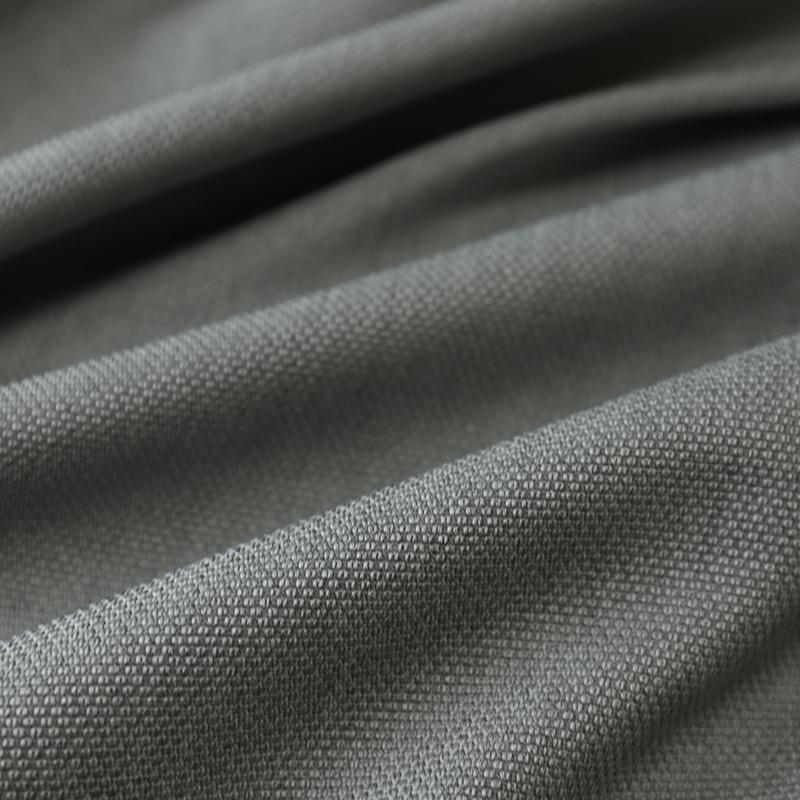
This is where a durable fine twill earns its keep. A firm, tightly woven polyester in the 240–300 gsm band drapes cleanly, folds into a crisp stack and hides the creasing that softer fabrics hold after laundering. For rooms that combine blackout with a decorative face, a bonded or separate lining does the heavy lifting while the face fabric carries the design.
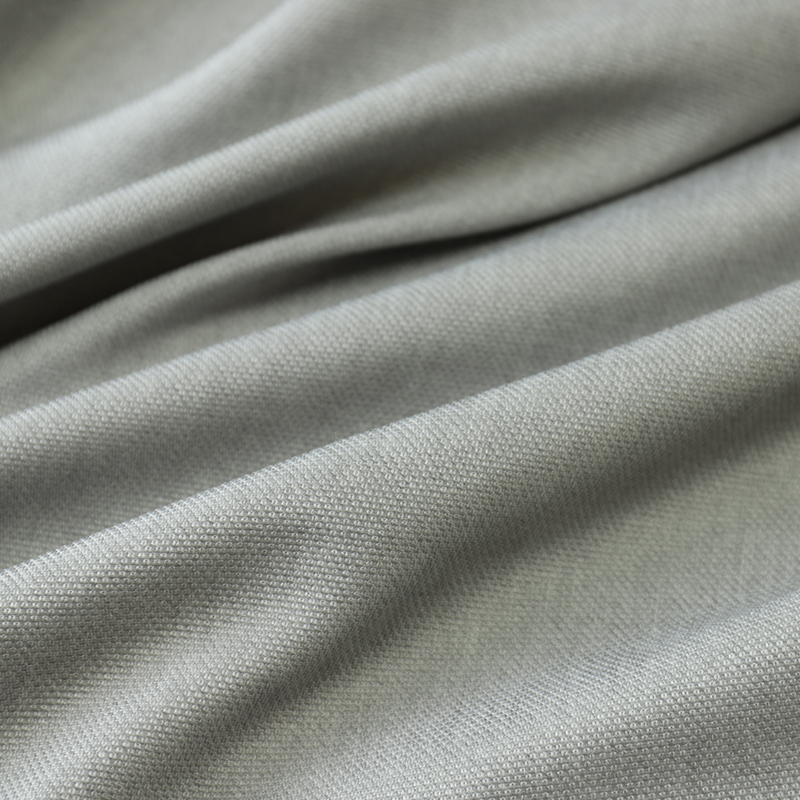 Durable Fine-Twill Polyester Hotel Guestroom Curtain FabricA 320 gsm fine-twill polyester main fabric for economy hotel guestrooms, offering wrinkle resistance, light blocking and easy maintenance.View Product →
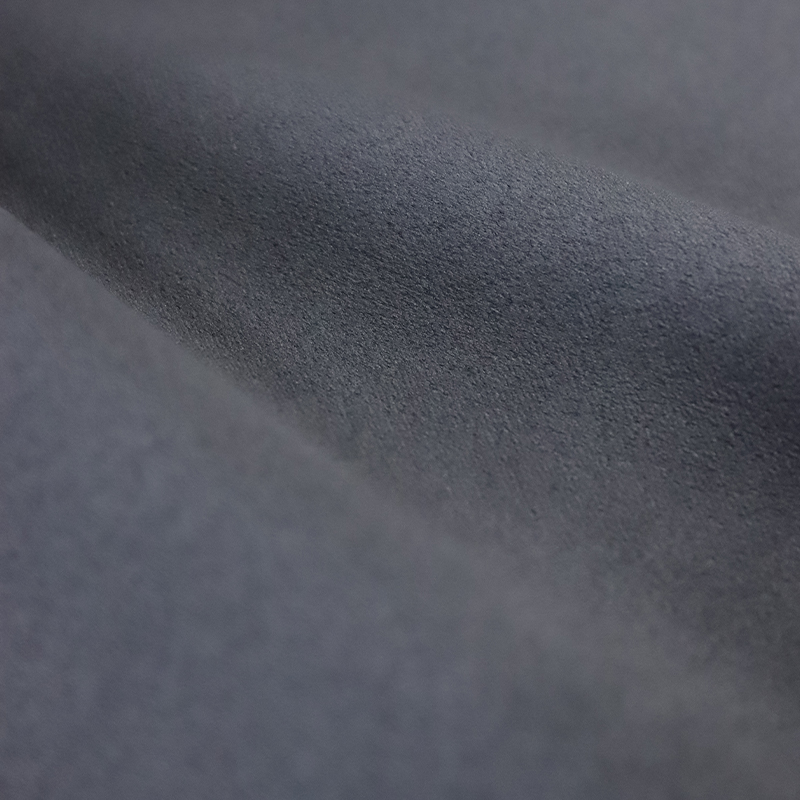
Public-area drapery needs more weight and more colour depth. Chenille-look and velvet-look polyesters give the fall and richness a lobby wants, and their denser constructions resist the abrasion of a busy circulation route. In corridors, a slightly higher-density weave also resists the light scuffing that happens when housekeeping trolleys pass close to the hem.
In most hotel projects the front fabric is only half the story. A blackout lining behind a polyester face delivers the light control guests expect without forcing the face fabric into an uncomfortable weight. Where a sheer look is wanted by day, a polyester voile in front of the blackout panel gives the room two moods from one track.
The table below is the short version of the range we produce and supply for hotel work. Treat the weights as indicative bands rather than fixed numbers — the right figure always depends on drop, fullness and the test standard the project has adopted.
| Construction | Typical weight | Hand and drape | Where it usually goes | What to watch |
|---|---|---|---|---|
| Durable fine twill | 240–300 gsm | Crisp, straight fall | Guest rooms, standard floors | Pair with a lining for blackout |
| High-density plain weave | 280–340 gsm | Matte, low sheen | Suites, twin-share rooms | Align pattern and seam placement |
| Chenille-look polyester | 300–380 gsm | Soft, heavy fall | Premium rooms, lobby panels | Needs a robust track; pile can flatten |
| Brushed matte / faux suede | 320–400 gsm | Quiet, velvety surface | Feature rooms, corridors | Mind lint and seam shading |
| Sheer voile | 60–110 gsm | Airy, translucent | Layered behind blackout | Check UV and abrasion exposure |
| Velvet-look polyester | 380–450 gsm | Deep pile, rich colour | Lobbies, lounges, corridors | Pile is directional; cut one way |
A curtain only performs as well as the system around it. Three details decide whether a 100% polyester curtain still hangs correctly in year eight: the sheer layer, the header, and the track.
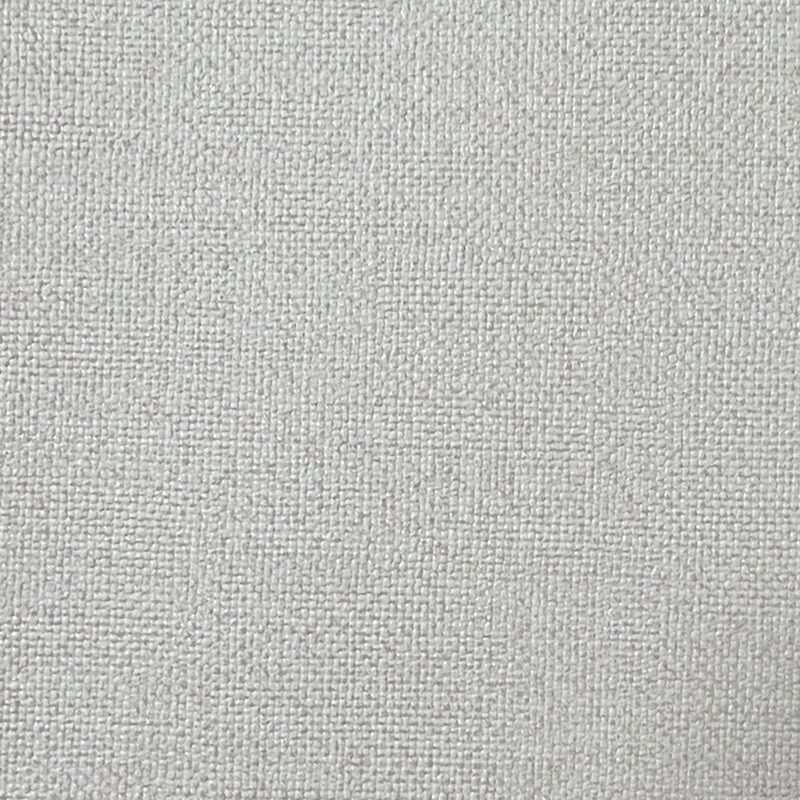
For sheer layers, a linen-textured voile in cream is the safe, forgiving choice — it softens hard daylight without turning the window into a flat white rectangle, and it hides the slight variation in guest behaviour better than a perfectly smooth sheer. Smooth translucent whites remain the right answer where the design language is minimal and the window is a clean rectangle.
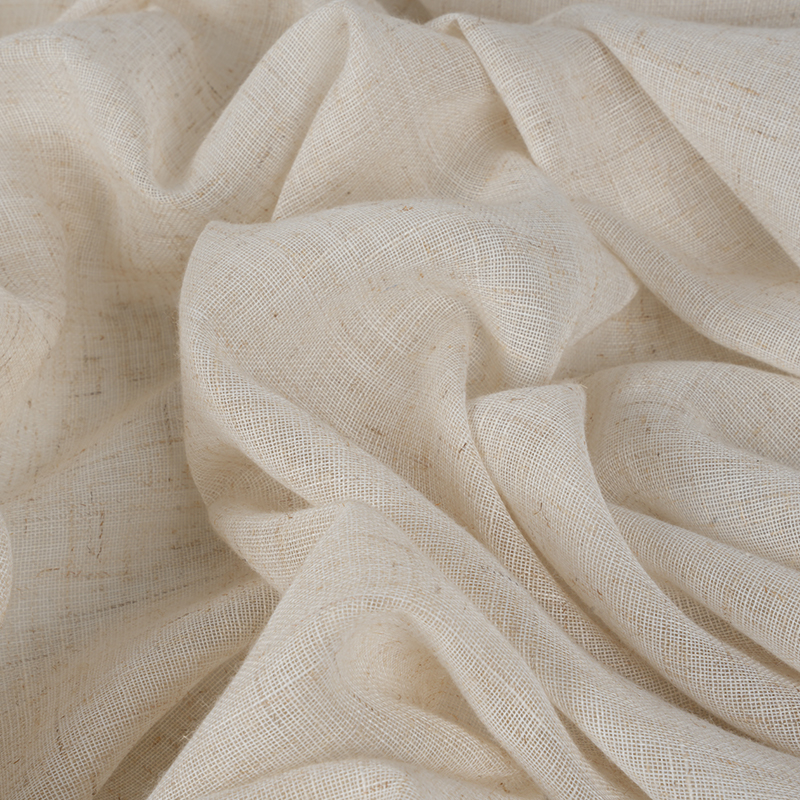 Linen-Texture Cream Illusion Sheer CurtainA cream sheer with linen-like slubs and grid texture, softening daylight while adding privacy for guestrooms and natural-style lounge schemes.View Product →
Tracks matter more than they are usually given credit for. A heavy-duty concealed aluminium track with a silent glide keeps a 380 gsm panel moving with one hand and removes the rattle that guests notice at night. Where the operator plans automated blackout for accessible rooms or premium floors, a smart silent electric track lets the same panel be drawn by wall switch, remote or room controller without changing the fabric specification.
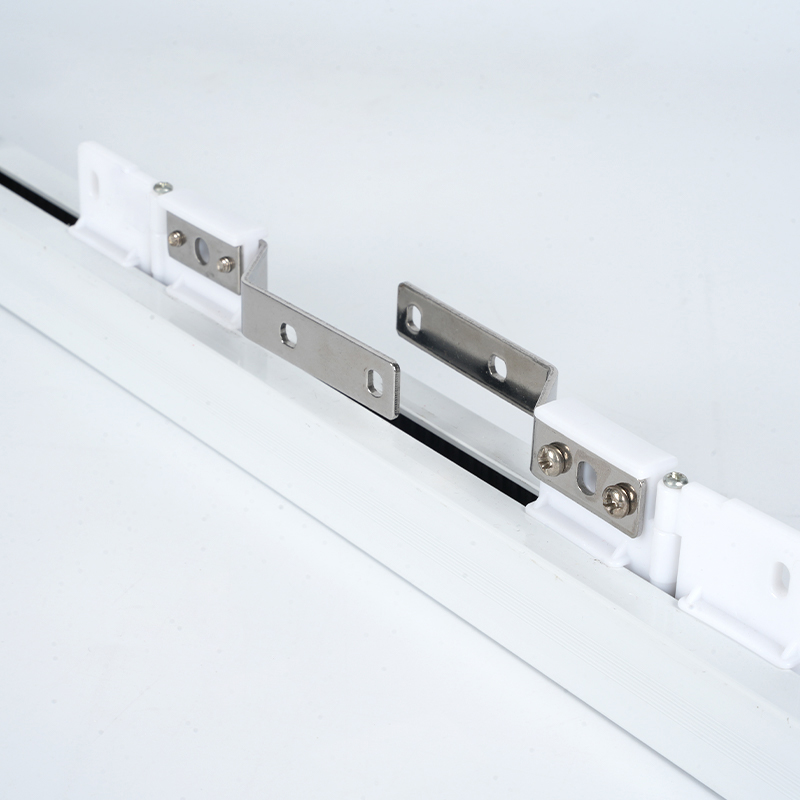 Heavy-Duty Concealed Aluminum Silent Curtain TrackA reinforced concealed aluminum track with nylon pulleys and noise-dampening strip, supporting heavy blackout and double-layer curtains with quiet, smooth movement.View Product →
Header choice completes the system: pinch pleat for a formal lobby, wave or ripple fold for a clean corridor line, eyelet only where the design can carry the hardware. Fullness of 2.0 to 2.5 times the track width is the usual compromise between generosity and stack depth.
Most problems we see on site were decided on paper, not in production. Running through these points early saves a surprising amount of rework.
Polyester is forgiving, but it rewards a simple routine. A few habits extend the working life of a hotel curtain considerably:
We have been coating and weaving for hotel interiors for well over a decade, and since 2019 the business has been organised specifically around hospitality projects — wallpaper, wall protection and panels, contract curtains and accessories, and flooring, produced under one roof rather than assembled from traders. That structure is why a question about curtain weight can be answered alongside a question about the wall finish behind it, and why a shade match between a corridor panel and a lobby panel is a production conversation rather than a negotiation between three suppliers.
If you would like to see how the wider package fits together, our manufacturing capabilities set out the production and finishing routes behind each category. When you have a room schedule in hand, talk to our team with the drop, the track width and the blackout target, and we will come back with a construction and a sample rather than a catalogue page.
100% polyester curtains are not the cheapest option in the building and they are not the most glamorous — they are simply the construction that most reliably still looks right after a few thousand guests. Choose the weave for the zone, line it properly, hang it on hardware that respects its weight, and the window will stop being a maintenance item and start being part of the room the guest remembers.
Recommended Products
Recommended News





 English
 русский
 Español
 عربى