2026-11-03
Content
Walls make up most of the surface area in a hotel, yet they usually get the least attention during specification. Then the project opens, the corridor lights come on, and every seam, every dull patch, every pattern that looked fine on a small sample becomes visible. PVC wallpaper is one of the few materials that can carry that much visual weight while still surviving daily cleaning, luggage carts, and the occasional coffee spill. This guide walks through the decisions that actually matter: backing, weight, embossing, print method, and how to match a wall covering to the space it lives in.
PVC wallpaper is a layered product. A backing gives it dimensional stability and strength, a PVC paste layer gives it body and wipeability, a print layer creates the design, and an optional surface treatment adds texture or a matte finish. The quality of the finished roll depends on how well those layers work together, not on any single one of them.
It helps to separate contract-grade PVC wallpaper from the consumer vinyl sold in rolls at a hardware shop. Contract material is typically heavier, printed with tighter registration, produced in batch for consistency across a large wall run, and documented for performance. When people say "vinyl wallpaper" and "PVC wallpaper," they usually mean the same family of product; the naming simply reflects whether the emphasis is on the polymer or on the finish.
If you only ask one technical question about a PVC wallpaper, ask about the backing. It controls how the material handles on site, how it behaves over time, and how much punishment the finished wall can take. Two backings dominate hotel work.
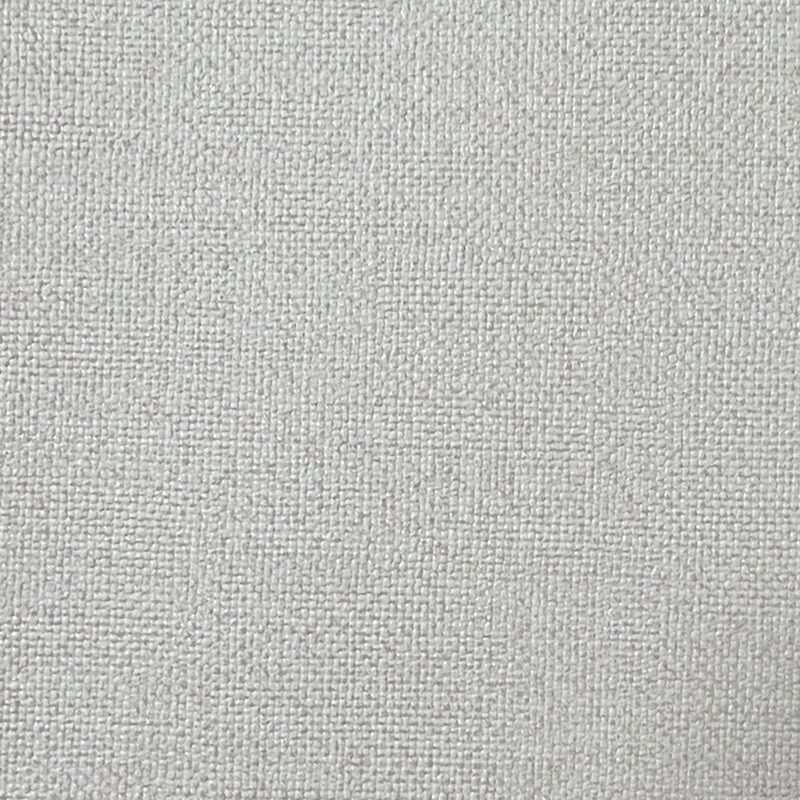
Non-woven backing is the standard choice for most guestroom and public area walls. It is dimensionally stable, forgiving of slightly imperfect plaster, and works well with paste-the-wall installation, which speeds up large runs and reduces the risk of over-soaking. Cross-woven fabric backing adds a reinforcing grid of threads inside the substrate. It resists tearing and dimensional movement better, which matters in corridors where carts scrape along walls and where long, uninterrupted runs leave nowhere to hide a stretched seam.
| Backing | Typical use | Handling notes |
|---|---|---|
| Non-woven | Guestrooms, meeting rooms, residential-style suites | Paste-the-wall method, quick to trim, good on large flat runs |
| Cross-woven fabric | Corridors, lift lobbies, high-traffic public walls | Higher tear resistance, holds shape well over long drops |
| Heavy embossed PVC | Feature walls, reception backdrops, ceilings in some schemes | Hides minor substrate flaws, needs careful seam planning |
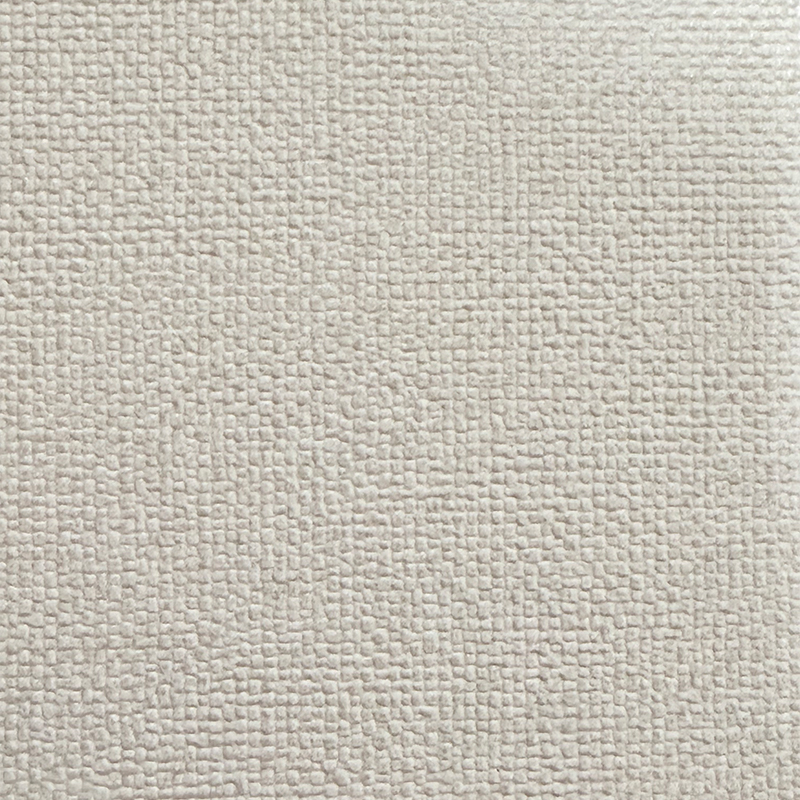
Gram weight per square metre tells you how much material is on the wall, and higher weight generally means deeper embossing, better opacity, and more resistance to scuffing. A heavier roll also hides more. On a refurbishment where the existing plaster has a history, a high-gram-weight deep embossed PVC wallpaper can absorb small undulations that a light, flat material would expose under grazing light.
Deep texture catches light. In a corridor with wall washers every three metres, a strong emboss reads as a deliberate design feature; in a small guestroom with a single bedside downlight, the same texture can look restless. Heavy material also demands more from the installer, because seams are thicker and pattern matching has less margin for error. Match the weight to the light and the wall condition, not to a preference for bigger numbers.
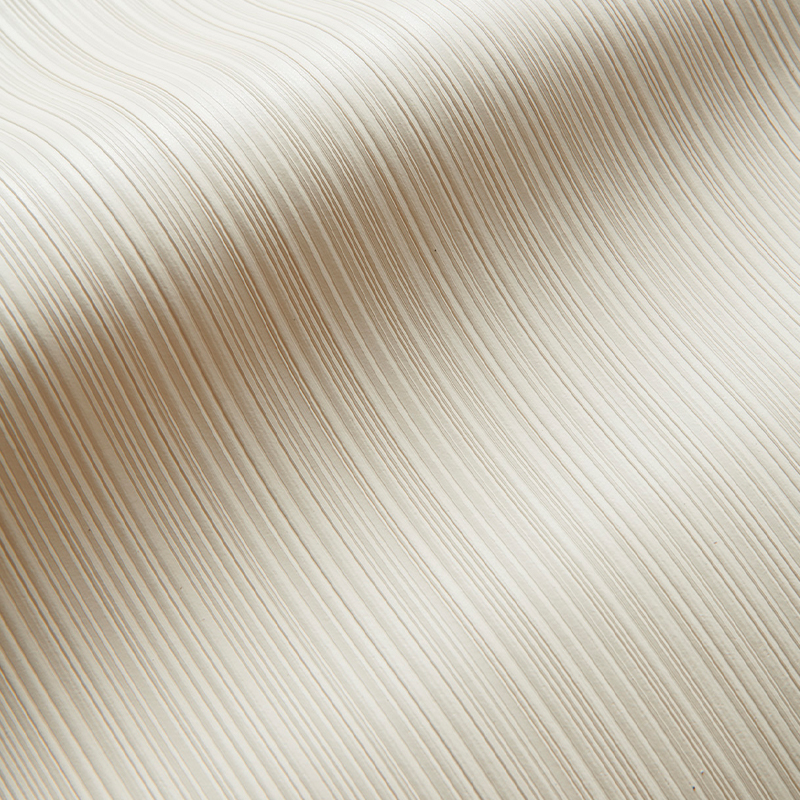
The print layer is where most of the aesthetic decision lives, and different processes produce visibly different results.
Build-up printing lays down ink in successive passes, building depth and density. It is the method behind convincing textile effects, multi-tone damasks, and patterns that need a sense of physical layering rather than flat colour. Where a scheme calls for a woven look or a subtle gradient, this is usually the process that delivers it.
Plant dye inkjet printing sits at the other end of the character spectrum. Tones come out softer and more natural, which suits large-scale murals, botanical motifs, and designs meant to feel hand-finished rather than engineered. The trade-off is that colour can drift slightly between production batches, so it is worth ordering the full project quantity in one run and keeping a reserve roll stored on site for later repairs.
One collection rarely fits a whole property, and it should not. The useful approach is to assign materials by how a space is used and cleaned.
A hospitality-focused range usually groups these needs into one coordinated system, so a designer can specify guestroom, corridor, and public area walls from the same palette without losing visual continuity between floors.
Most wallpaper failures we see trace back to something decided before the first roll was hung. These checks catch the majority of them.
We are a manufacturer, not a trading desk, and that shapes how we talk about this product. Zhejiang Jinmai New Materials has spent more than a decade in coating technology and moved into hotel decoration engineering in 2019, working as a vertically integrated supplier of both hard and soft finishes. Our PVC wallpaper range covers non-woven and cross-woven backings, high-gram-weight deep embossed constructions, build-up printing, plant dye inkjet printing, and a Hospitality Collection developed specifically around hotel interiors.
That range sits alongside wall panels, contract curtains and accessories, digital substrates, and PVC composite sheet flooring, which matters more than it sounds. When wall covering, wall protection, curtains, and flooring come from one production base, the tones stay consistent across a floor plate and there is one conversation about lead times instead of four. We would rather help you choose the right backing for a corridor than sell you the heaviest roll in the catalogue.
PVC wallpaper is a straightforward material that rewards a careful specification. Get the backing right for the traffic, the weight right for the light and the wall condition, and the print method right for the design intent, and the rest of the project tends to follow. If you are weighing options for an upcoming property, our team is happy to talk through wall conditions, sample batches, and how a collection can be coordinated across guestrooms, public areas, and the softer finishes nearby.
Recommended Products
Recommended News





 English
 русский
 Español
 عربى