2026-11-19
Content
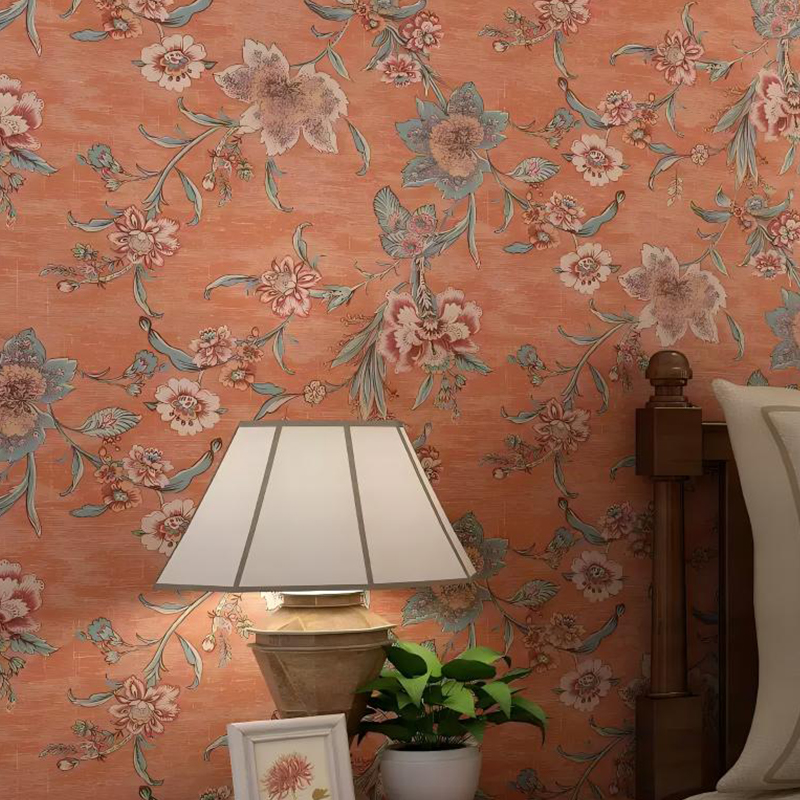
Walk into a well-finished hotel room and the walls do a quiet share of the work. They carry the light, soften the acoustics and hold the design together long after the furniture has been chosen. That is why we treat Hospitality Collection PVC Wallpaper as more than a decorative surface. It is a working material that has to survive luggage trolleys, cleaning schedules and years of guests who never think about wallcoverings at all.
Our team at Zhejiang Jinmai New Material Technology has spent more than a decade in coating technology and since 2019 has focused on hotel decoration projects. We manufacture wallcoverings, wall panels, contract curtains and flooring as an integrated supplier, which gives us a practical view of how one material affects the next. This article shares what we have learned about specifying PVC wallcoverings for hospitality interiors, without turning it into a sales pitch.
A guest bedroom wall and a corridor wall are not asked to do the same job. Guest rooms need a calm, tactile finish that looks good under bedside lamps and holds up to occasional scuffs. Corridors face constant traffic, housekeeping carts and the wear that comes with hundreds of check-ins. Public areas add another layer: food service, luggage handling and the visual expectation that comes with a first impression.
In practical terms, a hotel wallcovering needs to answer four questions. Does it resist everyday staining and cleaning? Does it stay dimensionally stable on the wall? Does it support the design intent without looking flat? Can it be installed and maintained within the project programme? A wallcovering that scores well on one question but poorly on the others tends to become a maintenance issue rather than an asset.
PVC wallcoverings earn their place in this environment because the surface is cleanable and the construction can be adjusted. A lighter backing suits smooth, well-prepared walls in quieter areas. A heavier construction gives corridors and public spaces more body. The key is not simply choosing the thickest option, but matching the construction to the wall condition, traffic level and cleaning regime.
The Hospitality Collection is organised around the realities of hotel projects rather than a single look. We produce non-woven backed, cross-woven fabric backed, high-weight deep embossed, build-up printed and plant-dye inkjet printed options. Each route has a different feel and a different role.
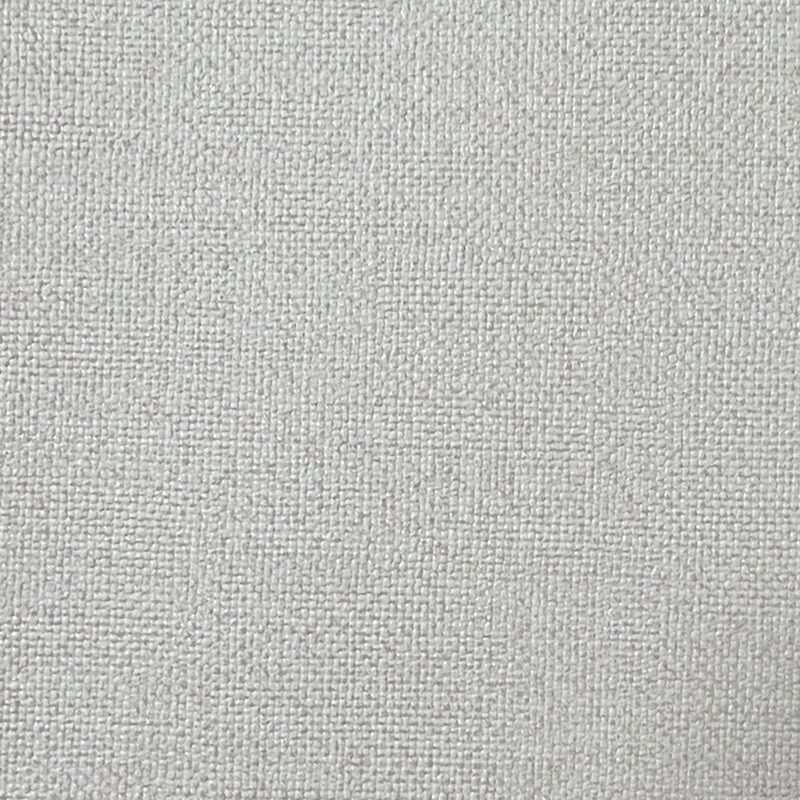
Non-woven backing is often chosen where a smooth, consistent surface is wanted and wall preparation is reliable. Cross-woven fabric backing adds dimensional stability and a more forgiving hand, which helps when a project involves large wall runs. Neither is universally better; the right answer depends on the substrate, the installation team and the way the space will be used.
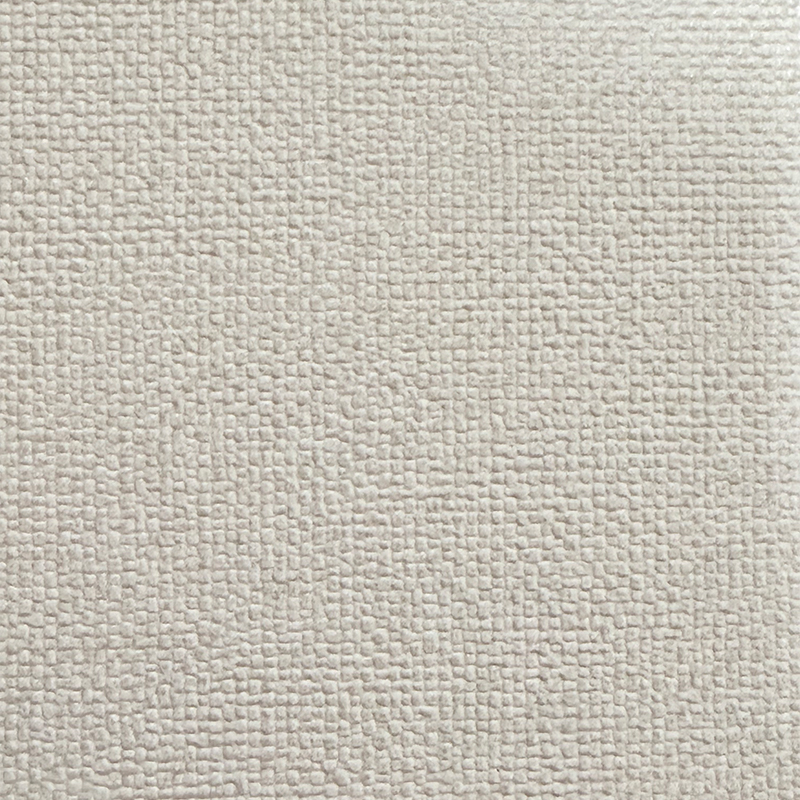
High-weight deep embossed wallcoverings give walls a tactile quality that flat prints cannot match. The deeper relief can help conceal minor surface imperfections while adding a soft, upholstered feel to guest rooms and suites. In busy corridors, a heavier construction also feels more substantial during daily cleaning and cart traffic.
Build-up printing allows layered pattern effects with a richer visual depth. Plant-dye inkjet printing gives us a route to softer colour transitions and more organic pattern work. Both are surface treatments rather than claims about performance, so they should be selected after the project's cleaning and maintenance expectations are clear.
| Construction | Character | Typical hotel use |
|---|---|---|
| Non-woven backed PVC | Smooth, consistent, easy to handle | Guest rooms, suites, apartment-style units |
| Cross-woven fabric backed PVC | Stable and forgiving on large wall runs | Corridors, lift lobbies, meeting areas |
| High-weight deep embossed PVC | Textured, substantial, softly dimensional | Feature walls, suites, executive floors |
| Build-up printed PVC | Layered pattern with visual depth | Lobbies, restaurants, branded public areas |
| Plant-dye inkjet printed PVC | Soft colour transitions and organic detail | Boutique rooms, spa areas, residential-style suites |
One collection can serve an entire property, but it should not be applied in the same way everywhere. We usually begin with a simple space-by-space review. It keeps the design language coherent while allowing the construction to change where wear is higher.
Guest rooms benefit from a quieter surface with enough texture to hide minor marks. Corridors need a more robust hand and a pattern that helps disguise scuffs between maintenance cycles. Food and beverage areas often need a stronger visual statement, but the surface still has to tolerate routine cleaning. Back-of-house areas are usually treated as a practical question first and an aesthetic one second.
| Space | What matters most | Suggested direction |
|---|---|---|
| Guest rooms and suites | Calm appearance, tactile finish, easy spot cleaning | Non-woven or embossed constructions with restrained pattern |
| Corridors and lift lobbies | Abrasion resistance, pattern that hides marks | Cross-woven or heavier embossed constructions |
| Lobbies and restaurants | Visual impact, cleanability, design continuity | Build-up or inkjet printed constructions with a protective surface |
| Service and back-of-house | Durability and straightforward maintenance | Practical mid-weight constructions with simple patterns |
Most wallcovering problems begin before production, during a conversation that did not happen. We prefer to ask a few direct questions early. They help us recommend a construction honestly rather than simply matching a colour reference.
We also ask for the lighting conditions. A colour that looks warm under showroom lighting can shift noticeably in a north-facing corridor. Where possible, we prefer to review a sample on site. It is a small step that avoids larger surprises.
A good wallcovering still depends on a good installation. Walls should be dry, clean and sealed before hanging. Adhesive choice, seam placement and ambient temperature all affect the final result. We encourage installers to follow the agreed method statement and to keep a small offcut from each batch for future reference.
Cleaning is usually where hotel wallcoverings either earn their keep or show their limits. Mild soap and water with a soft cloth is a sensible default for routine marks. Abrasive pads, solvent-heavy cleaners and excess water should be avoided unless the specific surface has been confirmed as suitable. Housekeeping teams should know which product is on which wall, because a single cleaning method applied everywhere can do more harm than good.
The long view matters more than the opening photograph. A wallcovering that can be spot-cleaned, repaired in sections and matched from a retained stock batch will usually serve a hotel better than a more dramatic finish that cannot be maintained. That is why we treat the Hospitality Collection PVC Wallpaper range as a system of constructions rather than a single catalogue of patterns.
Hotels are complex buildings. The wallcovering has to work with the wall panel, the curtain, the flooring and the cleaning team, often across a phased refurbishment. As a manufacturer involved in both materials and installation, we find that the most useful contribution is not a bigger sample book but clearer advice at the right moment.
If you are planning a hotel project, we are happy to review your wall conditions, traffic patterns and design direction, then suggest a construction within the Hospitality Collection that fits the way the property will actually operate. Good walls are rarely noticed by guests. They simply make the room feel right, year after year.
Recommended Products
Recommended News





 English
 русский
 Español
 عربى