2026-11-12
Content
Hotel walls are judged twice. The first judgement takes about three seconds, when a guest steps into the room or turns a corridor corner. The second judgement takes years, and it belongs to the housekeeping team who has to keep that surface looking the way it did on opening day. A wall panel that only wins the first judgement becomes somebody's maintenance problem; one that only wins the second becomes a design compromise. The interesting work is finding the option that does both.
We manufacture decorative materials for hotel projects — wall panels, PVC wallcoverings, contract curtains and flooring — so most of our working hours are spent on exactly that middle ground: what a wall has to survive, and what it has to look like while surviving it. What follows is the way we usually walk a project team through the decision.
Before anyone compares surfaces, we ask two questions: where does this panel sit, and what hits it? A guestroom feature wall behind a headboard is barely touched, but it is inspected from half a metre away under a warm bedside lamp, so joints, sheen consistency and pattern alignment matter more than impact resistance. A corridor wall at trolley height is the opposite: nobody studies it, but it meets luggage, housekeeping carts and cleaning chemicals several times a day.
Every hotel wall panel really has three jobs. It protects the substrate behind it, it carries the design intent of the interior concept, and it has to remain serviceable — cleanable, repairable in sections, and consistent enough that a replacement panel two years later still matches. When a specification fails, it is usually because one of those three was decided late, after the material had already been chosen on appearance alone.
Our range is organised by material route rather than by decoration, because the material route is what determines how a panel behaves on site, in a wet area, and five years after handover.
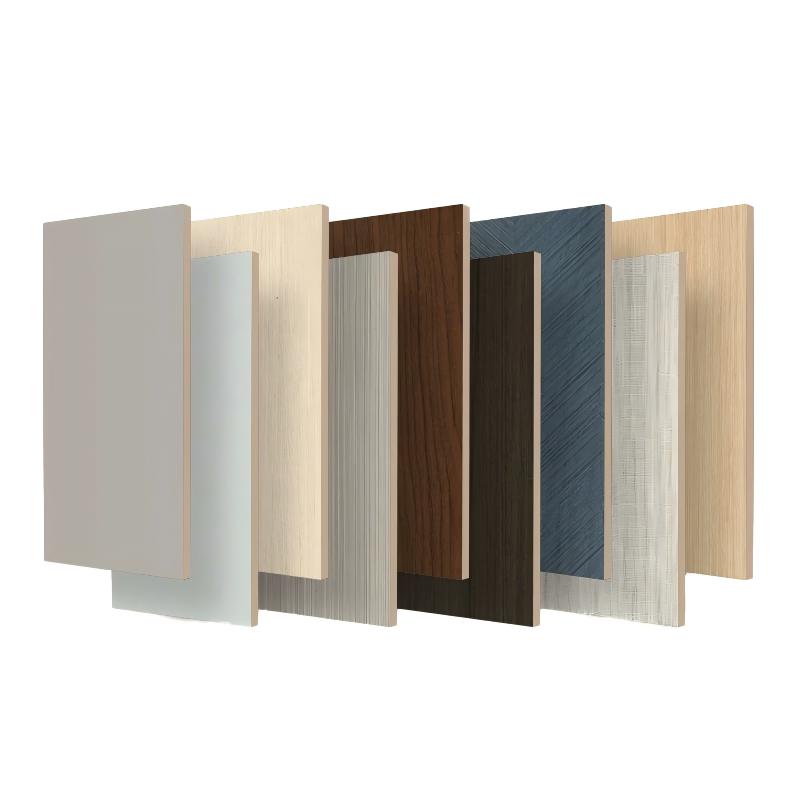
These are extruded wood-polymer profiles: wood fiber combined with a polymer matrix, finished with a decorative film and embossed texture. We build them in two ways. The high-density solid-core version is dense and tap-resistant, which suits guestroom feature walls, wardrobes and corridor sections that take occasional knocks. The lightweight hollow-core version handles faster and puts far less load on the building, which is valuable in refurbishments where the existing substrate cannot accept much weight. Both give a warm, non-metallic feel and a convincing timber read without the maintenance cycle that real timber veneer demands.
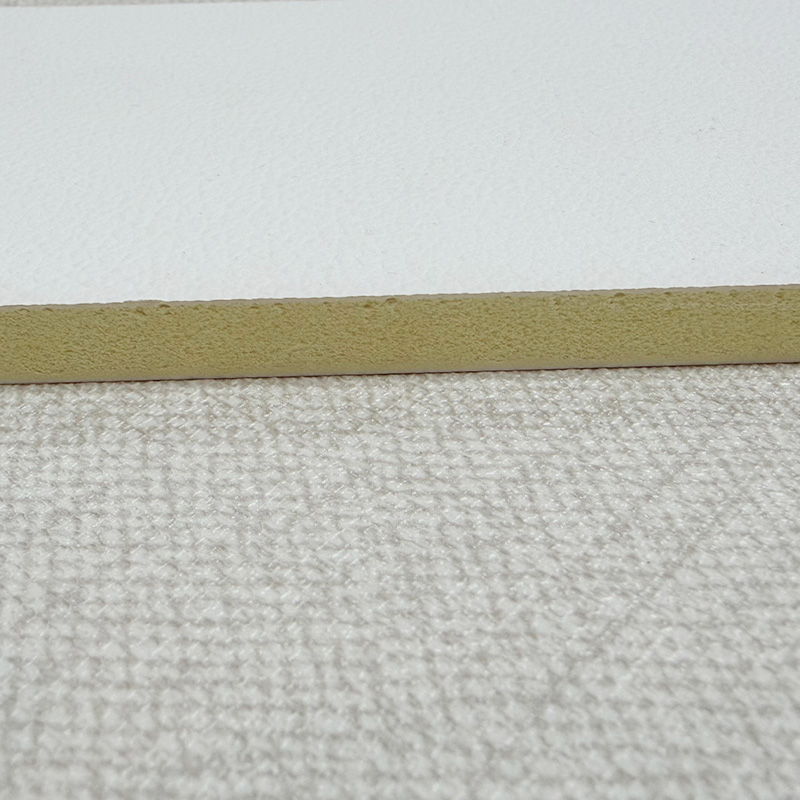 High-Density Solid-Core Bamboo-Wood Fiber Wall PanelA denser solid-core option for guestroom partitions, meeting-room walls and feature walls where strength, sound insulation and moisture resistance matter.View Product →
Carbon crystal board is a denser, mineral-rich board with a hard matte face and good dimensional stability. It is the family we reach for when moisture and cleaning frequency are the dominant concerns — bathrooms, spa and wellness areas, food service walls, and the wall behind a tea or coffee station. Antibacterial variants are available where the brand standard calls for them. The board is heavier than a hollow profile, so the fixing plan needs attention early rather than at installation.
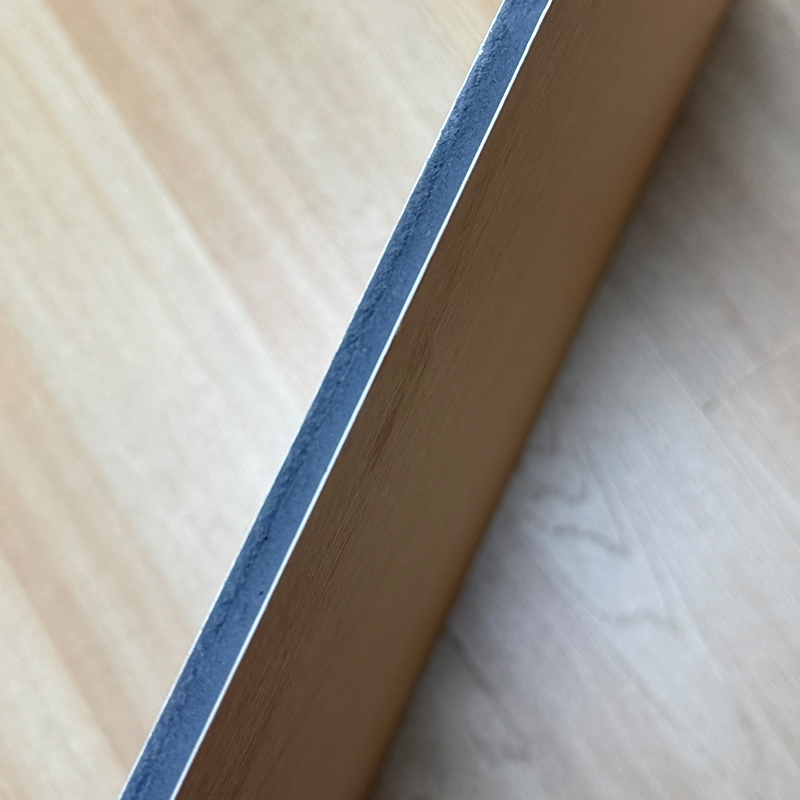 Antibacterial Bamboo-Charcoal Carbon Crystal Wall PanelA dense carbon crystal panel for moisture-prone, high-cleaning walls, with antibacterial surface and stain-resistant finish for bathrooms, kitchens and reception areas.View Product →
A protection panel is the honest answer to corridor damage. These are thin, resilient PVC panels, usually run as a functional band at trolley height along corridors, lift lobbies and service routes, with a decorative wallcovering above them. They clean easily, absorb impact, and can be replaced in a single section without repapering an entire elevation — which is precisely what a maintenance team wants to hear.
 PVC Anti-Collision Wall Protection PanelThin, resilient PVC panels for corridor trolley-height protection, easy to clean, impact-absorbing and replaceable in sections without repapering.View Product →
Where a more rigid, stone-like surface is wanted — wet zones, high-traffic public walls — SPC panels offer stability and a convincing mineral read. WPC profiles sit between the wood-polymer and rigid families, and Aero-Fiber cladding is our lightweight route for feature walls and fast refurbishment, where build-up tolerance and weight are the deciding factors rather than impact resistance.
The table below is the summary we send ahead of a specification meeting. It is deliberately short, because the useful comparison is behavioural, not decorative.
| Panel family | Feel and weight | Where it earns its place | What to confirm early |
|---|---|---|---|
| Bamboo-wood fiber, solid core | Dense, warm, tap-resistant | Guestroom feature walls, corridor sections, built-in joinery | Fixing method and edge trims |
| Bamboo-wood fiber, hollow core | Light, quick to handle | Long flat elevations, refurbishments with weight limits | Substrate flatness and impact expectation |
| Carbon crystal board | Hard, matte, mineral-dense | Bathrooms, spa, food service, tea stations | Joint detailing and edge sealing |
| PVC wall protection panel | Thin, resilient, cleanable | Corridors, lift lobbies, service routes | Colour match with the panel or paper above |
| SPC panel | Rigid, stone-like | Wet zones, heavy-traffic public walls | Weight on the substrate, cutting tolerance |
| Aero-Fiber cladding | Light, build-up friendly | Feature walls, fast refurbishment | Tolerance against existing surfaces |
In practice, projects rarely use one panel everywhere. A typical scheme mixes three or four families, and the mixing is what makes the budget work.
Most of the surprises we see on hotel projects are not about colour. They are about junctions, weight and paperwork.
Walls are only part of a guest's impression, and the panels have to sit comfortably next to the wallcovering, the curtains and the floor. We usually recommend resolving the wall buildup first, then matching wallcovering weight and backing to it, so the paper does not sit proud of a panel edge. Corridor schemes in particular benefit from one coordinated palette: a protection band, a decorative panel above it, and a textile that repeats the accent colour.
Because we produce wallcoverings and contract curtains alongside panels, we can supply a single coordinated package and flag colour or sheen clashes before they reach site. If you are still at the stage of comparing options zone by zone, our guide to hotel wall panel applications and selection criteria walks through the same logic in more detail.
When a design team asks how to keep the process calm, this is the order we suggest.
Zhejiang Jinmai New Materials is a national high-tech enterprise based in Zhejiang, with more than ten years of coating and manufacturing experience. We entered hotel decoration engineering in 2019 and positioned ourselves from 2020 as a core supplier for integrated hard and soft decoration in hotel projects. That matters practically: we make our own panels, wallcoverings, curtains and flooring rather than assembling a catalogue from third parties, so a film, emboss or board specification can be adjusted for a project instead of simply accepted or rejected.
Our production setup and the way we handle sampling, colour matching and packing are described in the factory overview. If you are mid-specification and want a second opinion on where a protection band should start or whether a corridor elevation should carry paper or panel, we are happy to talk it through — that conversation usually saves a change order.
Hotel wall panels are not a glamorous subject, but they are one of the few specification decisions a guest touches, a housekeeper cleans and an owner funds. Get the material route right for each zone, detail the junctions properly, and keep a little spare stock in the store room, and the walls will quietly do their job long after the opening photographs have been filed away.
Recommended Products
Recommended News





 English
 русский
 Español
 عربى